
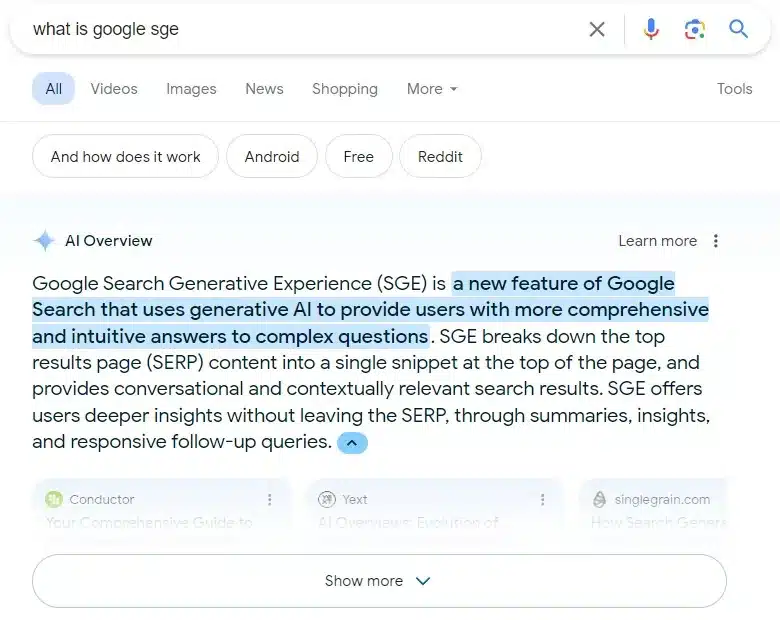
SGE stands for “Search Generative Experience.” This means that when you use Google to search for something, the first thing you will see is a real-time generated response. If you have an older Google account, you may have already noticed this pop-up as part of a beta test they are currently conducting. Google is using AI to scan search results for you and compile its findings into a concise summary, saving you the time of reading multiple web pages.
Understanding Google SGE
SGE stands for “Search Generative Experience.” This means that when you use Google to search for something, the first thing you will see is a real-time generated response. If you have an older Google account, you may have already noticed this pop-up as part of a beta test they are conducting right now. Google is using AI to scan search results for you and compile its findings into a small summary instead of you spending time reading a handful of different web pages.
How is Google SGE going to change the way I use the internet?
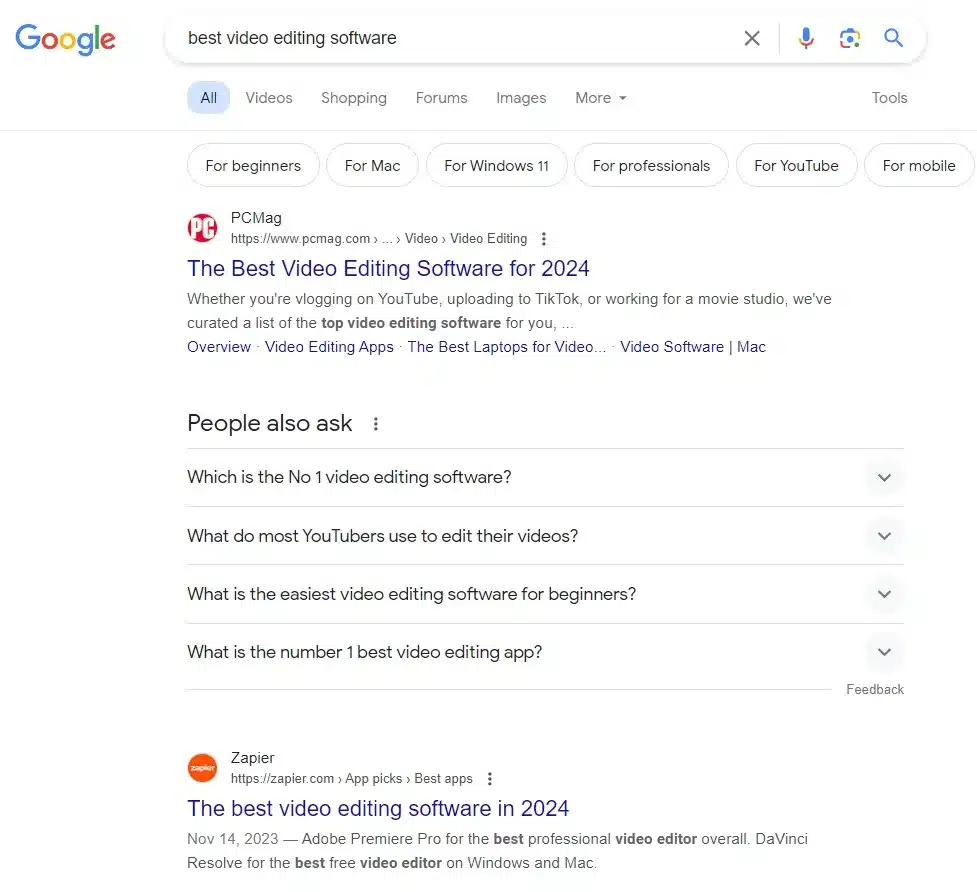
Currently, when you use Google’s search engine, a few different things will show up depending on your search.
Sometimes, your top results are all sponsored (Paid for by businesses to show up first, even though their page may not be the best match for your search).
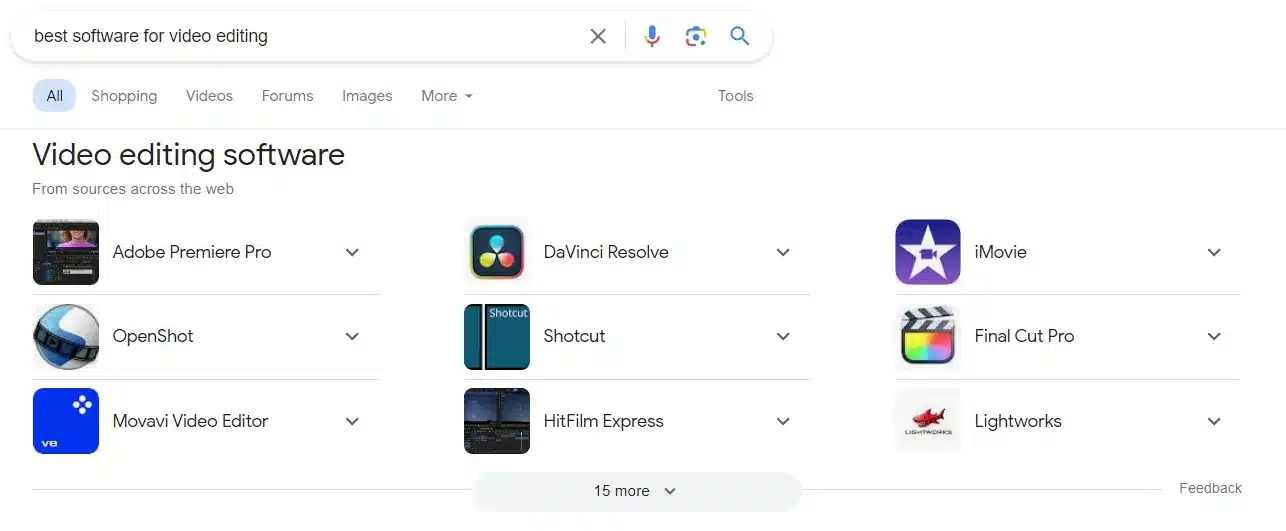
At other times, you will receive a list of pages with snippets from the page highlighted, showing how they match your search. You then scroll through these, reading the snippets, trying to find a page that has the information you want. Sometimes, you have to open several before you find what you’re looking for.
Google’s SGE is going to change this. When you search for something, the AI will scan the search results for you and provide an excellent summary that answers your question or points you in the right direction. Think about how much time this will save!
What Google SGE Means for Businesses
Many businesses are worried that this will result in a drop in traffic to their sites. Less traffic means fewer eyes on their pages and, depending on their business model, means fewer ads viewed or fewer customers.
Some view this as stealing. Companies spend a lot of time building pages and researching keywords to get to the top of the search engine results, and now people might not even see these pages; they will see the AI-generated results instead.
Some aspects of this may be accurate. Although users may receive generated results utilizing information from your page, they will still acknowledge and credit the sourced pages.

If your site ranks at the top of the search results, it could be utilized and displayed as the source for the AI-generated results. Therefore, the question now becomes – does the actual content on your site, which contains relevant keywords and ranks high, provide value to the visitor? This is a significant concern for many websites. Content and keyword stuffing can have a detrimental effect if you are creating clickbait solely to drive traffic. Additionally, by not offering truthful or beneficial information, this can harm your brand image. By producing quality content, you will be duly rewarded..
Generative AI is the New Search
Websites with good, healthy, and relevant content will remain at the forefront of the search engines. Users will save time sifting through clickbait articles getting the answers they need. Overall, this could be a good move for Google. Anything to streamline the search process will benefit the end user. Keep in mind that Google is a business, too. If they do not innovate, people will not use their software, and they could lose their 25 years of dominance in the market .